Social Work

Aging In Recovery, Articles, Social Work

Aging in Place—But Not Always in Stability

Aging in place has become one of the most widely promoted ideas in aging policy. The concept is simple: remaining at home as one grows older is associated with independence, comfort, and continuity. For many, this holds true. But the model assumes something that is not always present—stability. For individuals aging in recovery, stability is […]

, , , , ,

Aging in Place—But Not Always in Stability Read Post »

Aging In Recovery, Articles, Social Work

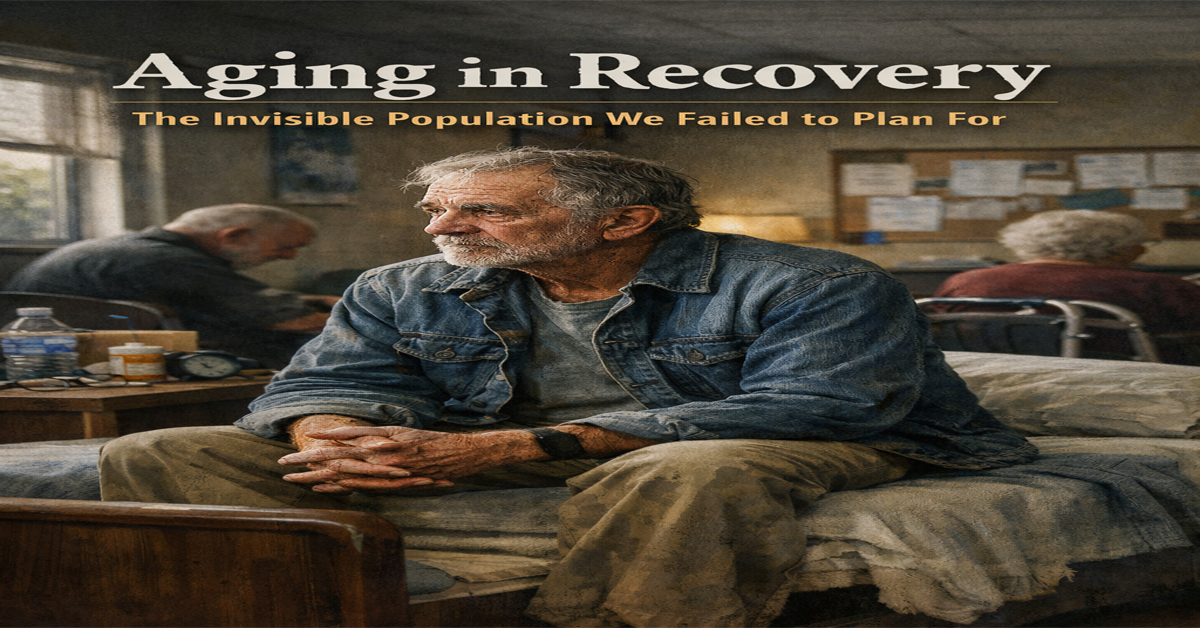
Aging in Recovery: The Invisible Population We Failed to Plan For

For decades, the conversation around addiction has focused on one phase: active substance use. When recovery is discussed, it is often framed as a short-term outcome rather than a lifelong process. But what happens after recovery is achieved—and sustained for decades? A growing number of individuals are now entering older adulthood after years, even decades,

, ,

Aging in Recovery: The Invisible Population We Failed to Plan For Read Post »

Aging In Recovery, Articles, Social Work

Aging in Recovery: When Recovery Succeeds but Systems Disappear

When Recovery Succeeds, but Systems Disappear Most systems are designed to respond to problems. A crisis emerges. A response is activated. An outcome is achieved. Then the system moves on. In recovery services, this structure is everywhere. Programs are designed for entry. Services focus on stabilization. Support is strongest at the beginning. But what happens

, , , ,

Aging in Recovery: When Recovery Succeeds but Systems Disappear Read Post »

Aging In Recovery, Articles, Social Work

Aging In Recovery: When Systems Dont Know What To Do Next

For decades, social and healthcare systems have been designed to respond to crises. Substance use. Hospitalization. Instability. When these events occur, systems activate. Services appear. Interventions are deployed. But what happens when SUD recovery works? What happens when someone lives 20, 30, even 40 years in recovery — and begins to age? This is where

, , ,

Aging In Recovery: When Systems Dont Know What To Do Next Read Post »

Aging In Recovery, Articles, Social Work

Implications for Practice, Policy, and Lifespan Recovery Support

This is a hypothetical case for educational purposes, developed by Gil Cintron, LMSW She entered recovery at 22. At the time, no one used the phrase long-term recovery. The goal was simpler, more immediate: stop using, stabilize, survive. She had been living on the margins—selling sex to support her addiction, moving between unstable housing situations,

, , , , , , ,

Implications for Practice, Policy, and Lifespan Recovery Support Read Post »

Articles, Social Work

East Harlem

East Harlem, USA Born in Mother Cabrini hospital New York, NY. First 2 years of life lived on West 103rd Street. At the age of 2 my family moved into the Thomas Jefferson Houses in East Harlem, part of the NYC Housing Authority and soon thereafter referred to as “the projects.” This was a mixed 

, , , , , , , ,

East Harlem Read Post »

Scroll to Top