Expanding the Conversation Beyond Abstinence
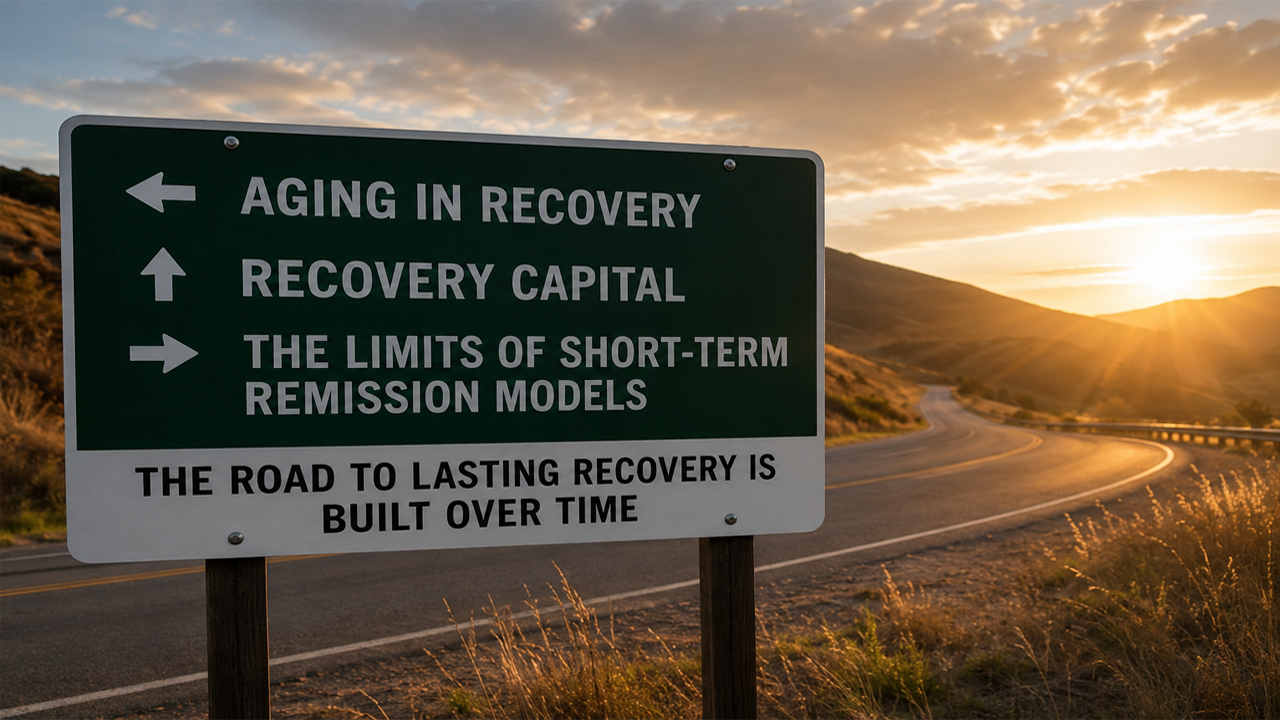
Abstract
Recent research examining Recovery Support Services (RSS) within Recovery Oriented Systems of Care (ROSC) provides growing evidence that addiction recovery extends beyond acute treatment episodes and requires long-term community support structures. However, much of the addiction treatment field continues to define “recovery” primarily through short-term abstinence and remission criteria. This article argues that remission and abstinence alone do not fully capture the lived reality of long-term recovery. Drawing upon recent literature, including Day et al. (2025), this paper explores the distinction between abstinence and recovery, the importance of recovery capital, and the emerging need for recovery-informed aging services for older adults living in sustained long-term recovery. The Aging in Recovery Residential Model (ARRM) is presented as a conceptual framework designed to address the growing service needs of individuals aging in recovery over multiple decades.
Introduction
The January 2025 monograph by Ed Day, Laura Charlotte Pechey, Suzie Roscoe, and John F. Kelly, Recovery Support Services as Part of the Continuum of Care for Alcohol or Drug Use Disorders, contributes important evidence supporting recovery-oriented systems of care (ROSC) and the growing role of recovery support services (RSS) within addiction treatment and behavioral health systems (Day et al., 2025).
The study acknowledges that alcohol and other drug (AOD) use disorders function as chronic conditions requiring long-term management, continuing care, peer support, housing stability, employment support, and recovery-oriented community engagement. These findings strongly support several core principles underlying the concepts of Aging in Recovery and the Aging in Recovery Residential Model (ARRM).
However, the study also highlights an ongoing tension within the addiction treatment field itself.
Much of the modern behavioral health system continues to equate relatively short periods of abstinence with “recovery success.” Within many professional settings, remission under the Diagnostic and Statistical Manual of Mental Disorders (DSM-5-TR) criteria may be interpreted as evidence of successful recovery when an individual no longer meets the diagnostic threshold for substance use disorder over a 12-month period (American Psychiatric Association [APA], 2022).
Yet for many individuals living in long-term recovery communities, abstinence and recovery are not synonymous concepts.
The Difference Between Abstinence and Recovery
The DSM-5-TR framework defines remission largely through symptom reduction and the absence of diagnostic criteria over a specified period (APA, 2022). While clinically useful, this model may unintentionally oversimplify the complex, prolonged process of recovery experienced by many individuals who sustain recovery over decades.
Day et al. (2025) themselves acknowledge that relapse risk remains elevated for years after cessation of substance use and note that it may take four to five years before relapse risk approaches rates found within the general population.
This observation is significant.
It suggests that recovery cannot reasonably be reduced to 30 days, 90 days, six months, or even one year of abstinence.
True recovery, particularly within peer-led recovery communities, often involves profound and sustained transformation affecting virtually every dimension of a person’s life. Recovery frequently includes changes in:
- identity
- behavior
- relationships
- emotional regulation
- coping mechanisms
- spirituality
- social functioning
- accountability
- community engagement
- worldview and meaning-making
From this perspective, abstinence alone may simply represent an interruption in substance use rather than full recovery transformation.
An individual may remain abstinent while continuing to exhibit destructive thinking patterns, dysfunctional behaviors, emotional instability, isolation, dishonesty, manipulation, or unresolved trauma associated with active addiction.
Recovery, therefore, becomes something far deeper than temporary symptom suppression.
Recovery becomes a lifelong developmental process.
Recovery Capital and Long-Term Recovery
One of the most important contributions of Day et al. (2025) is the emphasis placed upon “recovery capital.”
The authors define recovery capital as the internal and external resources that support sustained recovery and human flourishing. Recovery capital includes stable housing, employment, social support, peer engagement, physical health, community belonging, purpose, and access to supportive environments.
The concept aligns closely with the principles underlying Aging in Recovery and ARRM.
The accumulation of recovery capital often unfolds gradually over decades rather than months. Long-term recovery is frequently associated with increasing social stability, emotional maturity, community integration, family restoration, spiritual growth, and identity reconstruction.
These dimensions are rarely captured through traditional clinical measurements focused narrowly on remission status or short-term abstinence outcomes.
Recovery Capital and Long-Term Recovery
One of the most important contributions of Day et al. (2025) is the emphasis placed upon “recovery capital.”
The authors define recovery capital as the internal and external resources that support sustained recovery and human flourishing. Recovery capital includes stable housing, employment, social support, peer engagement, physical health, community belonging, purpose, and access to supportive environments.
The concept aligns closely with the principles underlying Aging in Recovery and ARRM.
The accumulation of recovery capital often unfolds gradually over decades rather than months. Long-term recovery is frequently associated with increasing social stability, emotional maturity, community integration, family restoration, spiritual growth, and identity reconstruction.
These dimensions are rarely captured by traditional clinical measurements that focus narrowly on remission status or short-term abstinence outcomes.
The Invisible Cohort
The population of older adults living in long-term recovery continues to grow, yet remains largely understudied within both addiction science and aging services.
This population may be described as an “Invisible Cohort.”
Society measures addiction extensively through overdose statistics, hospitalization data, incarceration rates, relapse rates, and crisis intervention outcomes. Far less attention is devoted to studying individuals who successfully survive addiction and continue aging in sustained recovery across decades.
Yet these individuals increasingly confront:
- mobility limitations
- chronic illness
- social isolation
- cognitive decline
- housing instability
- transportation barriers
- grief and loss
- long-term care needs
Many also carry complex recovery histories and behavioral health experiences that traditional aging systems were never specifically designed to understand.
Day et al. (2025) strongly support the importance of long-term community-based recovery support systems, including peer support services, recovery housing, recovery community centers, continuing care, and employment supports. These findings reinforce the broader argument that recovery requires evolving support systems extending far beyond acute treatment episodes.
However, even this important 2025 review largely remains focused on:
- relapse prevention
- remission
- early recovery stabilization
- treatment engagement
The aging-related realities of individuals with multiple decades of sustained recovery remain comparatively underexplored.
Aging in Recovery and the ARRM Framework
The Aging in Recovery Residential Model (ARRM) attempts to extend this conversation into the fields of social work, gerontology, behavioral health, long-term care, housing, and workforce development.
ARRM proposes that older adults living in long-term recovery constitute a distinct population with unique service needs requiring recovery-informed systems of care.
This framework includes:
- recovery-informed home care
- recovery-informed assisted living
- recovery-informed nursing support
- peer-informed workforce development
- recovery-sensitive care coordination
- recovery-centered social environments
- long-term community integration supports
The concept also recognizes that many older adults in long-term recovery may wish to preserve recovery identity, peer affiliation, and recovery culture even as they transition into higher levels of care.
Traditional aging systems often lack familiarity with recovery culture, peer recovery principles, anonymity traditions, or the psychosocial realities associated with decades of sustained recovery.
As a result, many older adults aging in recovery may eventually face systems that unintentionally undermine recovery identity and social support structures.
Conclusion
The work of Day et al. (2025) helps legitimize several foundational principles underlying Aging in Recovery and ARRM:
- Addiction functions as a chronic condition.
- Long-term support systems improve outcomes.
- Recovery capital is essential.
- Peer support matters.
- Housing stability influences recovery.
- Continuing care improves sustained remission.
- Recovery extends beyond acute treatment episodes.
However, the next major challenge facing addiction science, social work, gerontology, and behavioral health may no longer be simply helping people survive addiction.
Increasingly, the challenge becomes understanding how people age in recovery.
As growing numbers of individuals now achieve 20, 30, 40, and 50+ years of sustained abstinence and behavioral transformation, systems of aging services, assisted living, home care, and long-term care must evolve to meet the realities of this emerging population.
The Aging in Recovery Residential Model represents one attempt to begin addressing that future.
References
American Psychiatric Association. (2022). Diagnostic and statistical manual of mental disorders (5th ed., text rev.; DSM-5-TR). Author.
Day, E., Pechey, L. C., Roscoe, S., & Kelly, J. F. (2025). Recovery support services as part of the continuum of care for alcohol or drug use disorders. Addiction, 120(1), 1–45.
Granfield, R., & Cloud, W. (1999). Coming clean: Overcoming addiction without treatment. New York University Press.
Kelly, J. F., & Hoeppner, B. (2015). A biaxial formulation of the recovery construct. Addiction Research & Theory, 23(1), 5–9.
White, W. L. (2008). Recovery management and recovery-oriented systems of care: Scientific rationale and promising practices. Northeast Addiction Technology Transfer Center.