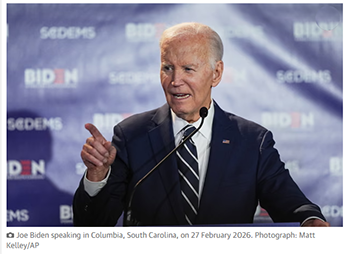
He’s trying to steal the election because he knows he can’t win your vote, so he’s going to do everything he can to prevent you from wanting to vote.
— Former President Joe Biden, Columbia, South Carolina, February 27, 2026
That warning should resonate deeply with Puerto Rican and Latino voters — not because of party politics, but because of history.
Our history.
For decades in New York City, the suppression of Puerto Rican and Latino political power did not look like Southern Jim Crow. It was quieter. Structural. Bureaucratic. Strategic. And it was effective.
If we forget that history, we risk repeating it.
Migration Without Representation (1950s–1960s)
After World War II, hundreds of thousands of Puerto Ricans migrated to New York City. As U.S. citizens under the Jones–Shafroth Act, they had the right to vote. But rights on paper did not equal power in practice.
Ballots were English-only.
There were no bilingual poll workers.
Political machines controlled nominations.
Communities in East Harlem, the South Bronx, and Brooklyn grew rapidly — but political infrastructure did not grow with them.
Turnout lagged. Representation lagged. Power lagged.
The system didn’t openly ban Latino voters. It simply failed to accommodate them — and that failure functioned as exclusion.
Language as a Barrier — Until Federal Law Stepped In
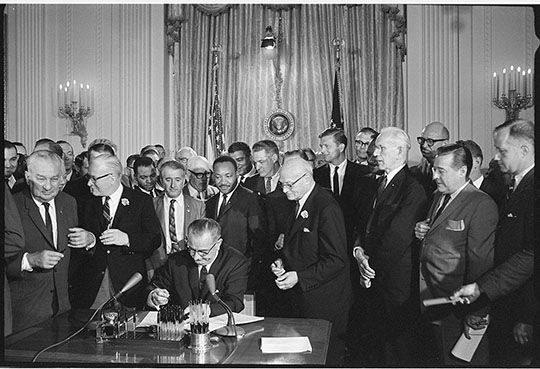
Everything began to shift with the 1975 amendments to the Voting Rights Act of 1965. For the first time, jurisdictions with substantial language minorities — including Spanish speakers in NYC — were required to provide bilingual ballots.
This change did not happen voluntarily. It required federal intervention.
Language exclusion had been suppressing participation. Once bilingual ballots became mandatory, the excuse of “administrative oversight” no longer held.
But language was only one tool.
District Lines as Weapons
Even as Latino populations surged, district maps were drawn to dilute their power.
Neighborhoods like East Harlem and the South Bronx were split into multiple districts — a tactic known as “cracking.” Instead of forming a majority in one district, Latino voters were divided across several, ensuring they could not elect candidates of their choice.
The Supreme Court’s decision in Thornburg v. Gingles established the legal test for vote dilution under Section 2 of the Voting Rights Act. That case empowered Latino advocates to challenge district engineering designed to weaken their vote.
By the 1980s and 1990s, litigation forced the creation of Latino-majority City Council and congressional districts. Representation increased — not because power was gifted, but because it was demanded.
Earlier, United Jewish Organizations of Williamsburgh v. Carey helped shape how minority districts could be drawn in New York, influencing how Latino-majority districts were eventually structured.
Courtrooms became battlegrounds for fair maps.
At-Large Elections & Machine Politics
For years, some officials were elected “at-large,” meaning citywide or borough-wide instead of by neighborhood districts.
On paper, that sounds democratic. In reality, it favored larger, established voting blocs and diluted concentrated Puerto Rican communities. When your neighborhood is 60% Latino but your election is citywide, your local majority disappears.
Layered on top of that was machine politics — the lingering culture of Tammany Hall. Even after its formal decline, the habits remained:
• Party leaders controlled endorsements
• Ballot access was tightly guarded
• Spanish-speaking voters were misinformed or “assisted” in ways that influenced outcomes
• Independent Latino candidates were discouraged or sidelined
Suppression was often inside the party structure, not just at the polling place.
It didn’t shout. It maneuvered.
The Young Lords: From Protest to Political Power
In the late 1960s and early 1970s, frustration turned into organized resistance.
Young Lords, founded in Chicago and later established in New York City, emerged as one of the most influential Puerto Rican grassroots movements of the era.
They are often remembered for their community health campaigns and school activism — but their political impact went deeper.
The Young Lords:
• Demanded language access and bilingual education
• Exposed systemic neglect in East Harlem and the Bronx
• Registered voters and encouraged political consciousness
• Challenged party gatekeeping
• Pressured city institutions to recognize Puerto Rican political power
Their activism helped reframe Puerto Ricans not as a passive migrant population, but as a political constituency.
They understood something critical:
Political infrastructure does not automatically follow demographic growth. It must be built. Fought for. Defended.
The energy of the Young Lords, along with other Latino advocacy groups, helped lay the groundwork for later redistricting victories and expanded representation in the 1980s and 1990s.
Grassroots mobilization forced institutional change.
1990s: A Turning Point
By the 1990s, after sustained litigation and organizing:
• Latino-majority City Council districts were created
• Congressional districts better reflected demographic realities
• Representation increased in the Bronx, Northern Manhattan, and parts of Brooklyn
This was not accidental progress. It was the result of:
• Voting Rights Act enforcement
• Section 2 lawsuits
• Community mobilization
• Demographic political maturity
For the first time, Latino political power in NYC began to resemble Latino population strength.
The 2000s–2010s: Suppression Becomes Administrative
In modern times, suppression rarely looks like 1960s barriers.
Instead, it often looks like:
• Voter roll purges (such as the 2016 Brooklyn controversy)
• Long lines in minority-heavy precincts
• Under-resourced polling sites
• Confusing ballot designs
• Delayed adoption of early voting
None of these tactics may openly declare racial intent. But impact matters more than wording.
Structural suppression does not need a racist sign over the door. It only needs a system that makes participation harder for certain communities.
Why This History Matters Now
Puerto Ricans are U.S. citizens by birth. We have served in wars. Built neighborhoods. Paid taxes. Raised families. Strengthened this city.
Yet history shows that when Latino political participation grows, countermeasures often follow — sometimes openly, sometimes subtly.
The tools change:
• Language barriers
• District manipulation
• Administrative purges
• Party gatekeeping
• Claims of fraud used to justify restrictions
But the pattern is familiar: discourage turnout. Weaken collective power. Maintain existing control.
That is why Biden’s warning matters.
If someone believes they cannot win your vote, the strategy becomes convincing you not to use it.
Not through shouting. Through exhaustion. Through cynicism. Through confusion. Through distrust.
The Real Lesson
The shift from suppression to empowerment in New York City did not happen because the system corrected itself.
It happened because:
• Federal law intervened
• Courts enforced Section 2
• Communities organized
• The Young Lords and others mobilized
• Voters showed up
Political power is not permanent. It must be exercised to remain real.
The Bronx. East Harlem. Northern Manhattan. Parts of Brooklyn. These areas did not become centers of Latino political influence by accident. They became powerful because voters persisted.
A Call to Action
The goal of suppression — whether structural, administrative, or strategic — is not necessarily to stop you from voting.
It is to make you feel like your vote does not matter.
History says otherwise.
Every bilingual ballot.
Every Latino-majority district.
Every elected official reflecting our communities.
All of it came from engagement.
Not withdrawal.
If there was ever a time to vote with clarity, it is now. If there was ever a time to reject cynicism, it is now. If there was ever a time to honor the work of those who organized before us, it is now.
The Young Lords did not march so we could sit out elections.
Our elders did not fight redistricting battles so we could surrender to fatigue.
Our vote is not symbolic. It is structural power.
And when exercised collectively, it changes maps, policies, funding, representation — and history itself.
The question is not whether the system has tried to limit Latino political strength in the past.
The question is whether we will allow discouragement to do that work today.
Vote.
Organize.
Stay informed.
Protect the power that was fought for.
History proves what happens when we don’t — and what becomes possible when we do.